Cosmic Discovery
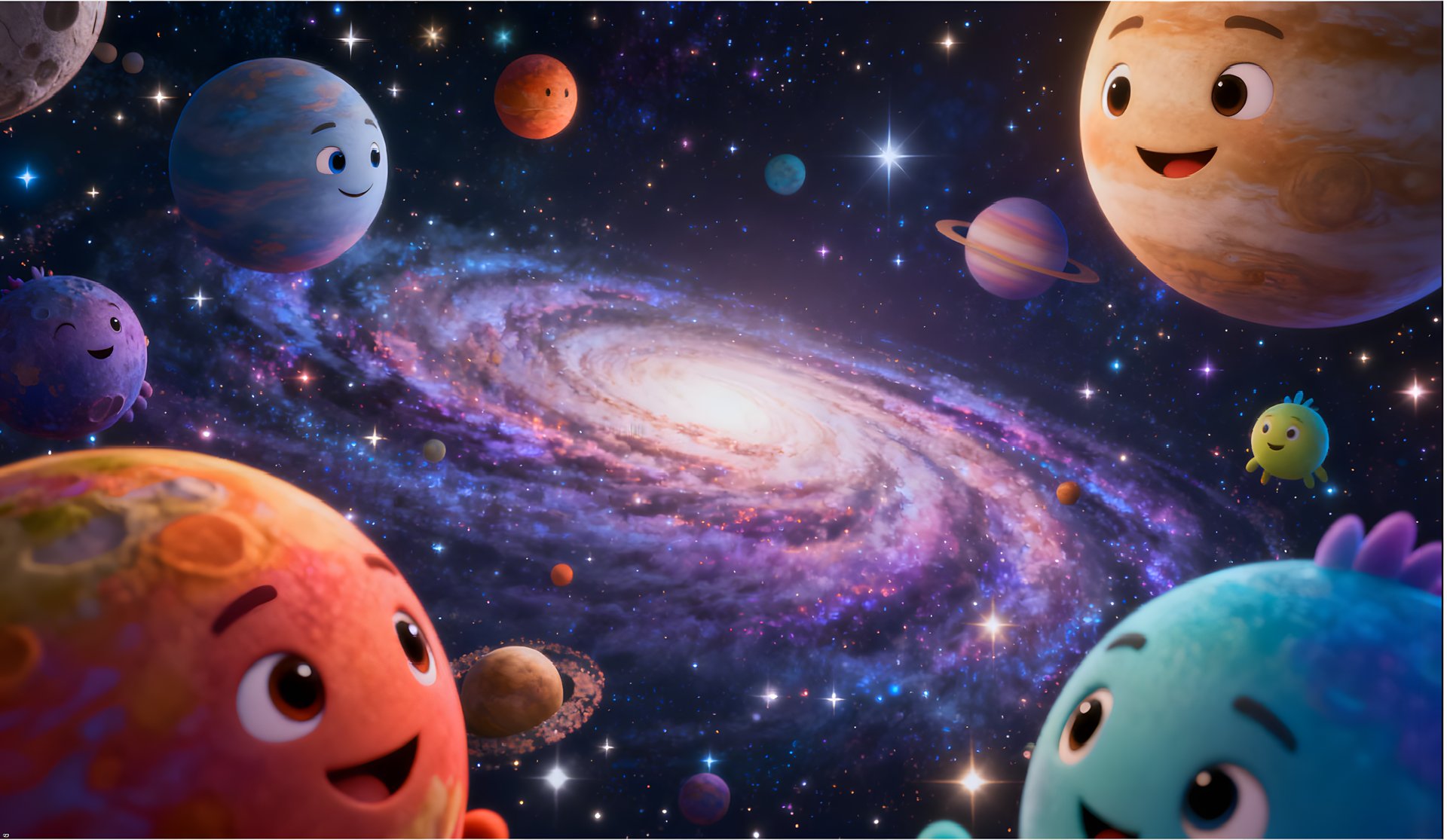
Explore the magical planets of our solar system.

A Magical Learning Journey Through Our Solar System
Our solar system is full of wonders. Each planet has its own colours, secrets, and personality. Let’s explore them one by one with fun facts, stories, and magical learning moments.
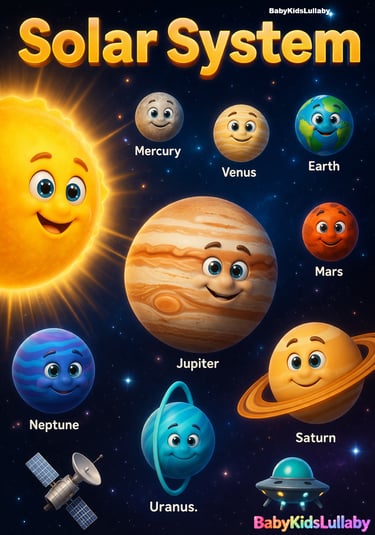
🌞 What You Can Learn From This Solar System Poster
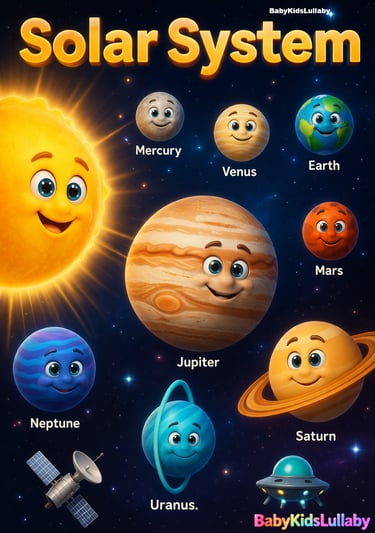
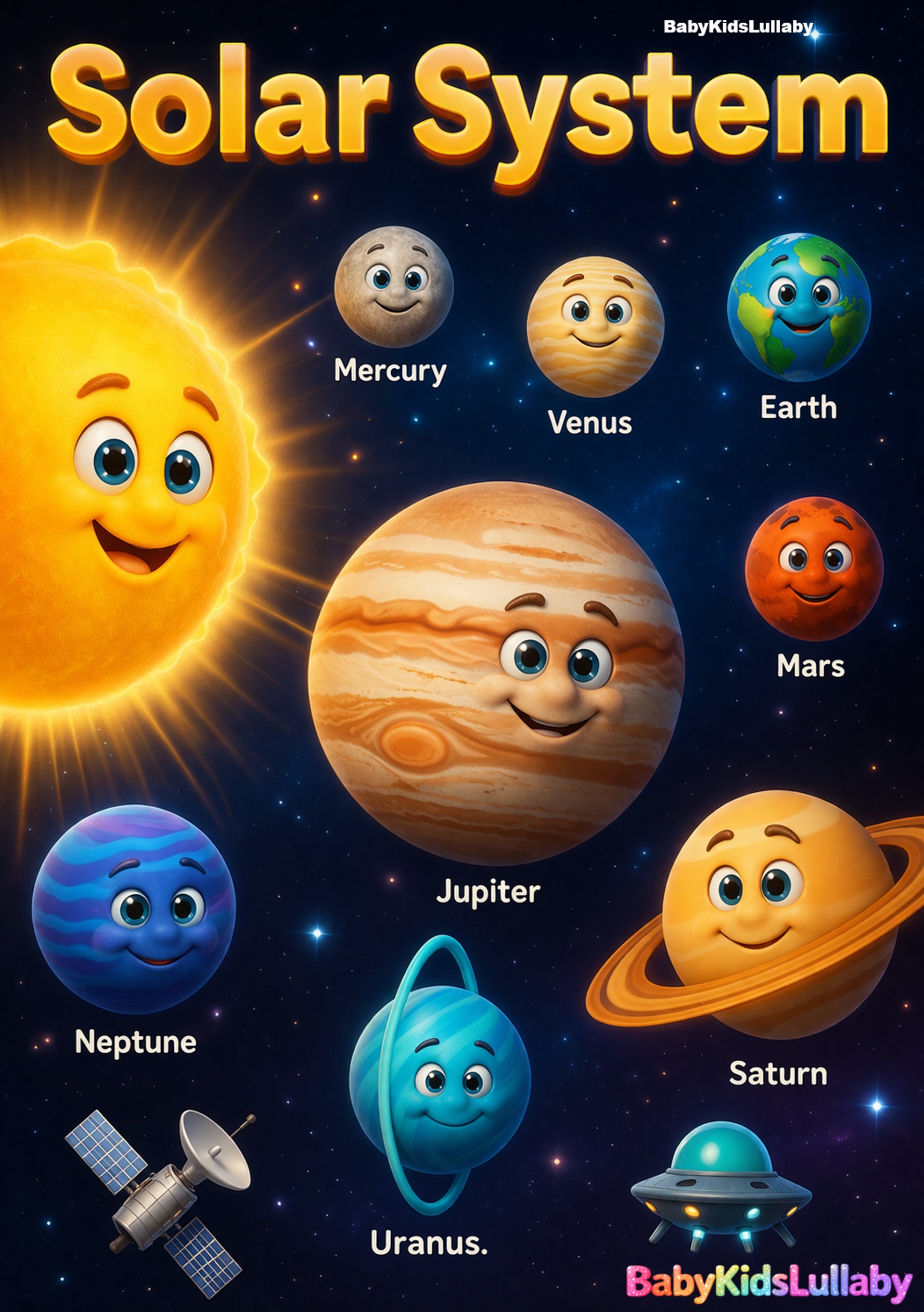
The Sun
The Sun is a giant star made of hot gas.
It gives us light, warmth, and helps plants grow.
Without the Sun, there would be no life on Earth.
Mercury
The closest planet to the Sun.
It is very hot during the day and freezing at night.
Mercury has no air to breathe.
Venus
The hottest planet in the Solar System.
It is covered in thick yellow clouds.
Sometimes people call it Earth’s “sister planet” because they are almost the same size.
Earth
Our home!
Earth has water, air, plants, animals, and people.
It is the only planet we know that has life.
Mars
The red planet.
It has giant volcanoes and dusty storms.
Scientists think Mars may have had water long ago.
Jupiter
The biggest planet of all.
It has a huge storm called the Great Red Spot, bigger than Earth.
Jupiter is made of gas, not rock.
Saturn
Famous for its beautiful rings.
The rings are made of ice and rocks.
Saturn is also a gas planet.
Uranus
A cold, blue planet that spins on its side.
It has rings too, but they are harder to see.
Uranus is very far from the Sun.
Neptune
The farthest planet from the Sun.
It is dark blue and extremely windy.
Neptune is also a gas giant.
🚀 Bonus: What Is a Solar System?
A Solar System is a space family:
• One star (the Sun)
• Planets
• Moons
• Asteroids
• Comets
🌞 Welcome to Our Solar System!
🌍 What Is a Planet?
It might sound like an easy question — after all, you’re standing on one right now!
But a long time ago, scientists didn’t have clear rules about what made something a planet. Then they discovered new space objects almost as big as Pluto, and everyone started wondering:
What counts as a planet, and what doesn’t?
So in 2006, scientists created three simple rules:
⭐ 1. A planet must go around the Sun
Just like Earth does.
⭐ 2. It must be round
Its own gravity shapes it into a smooth, round ball.
⭐ 3. It must have a clean path
Its orbit shouldn’t be crowded with lots of little space rocks.
Pluto didn’t pass the third rule, so it became a dwarf planet — still special, still amazing, just in a different group.
🚀 Ready to Explore?
Planets, moons, and tiny space wanderers all travel together around the Sun in a giant cosmic dance.
Here, you’ll discover what planets are, how they form, and what makes each one unique.
Let’s blast off and explore the wonders of space together!
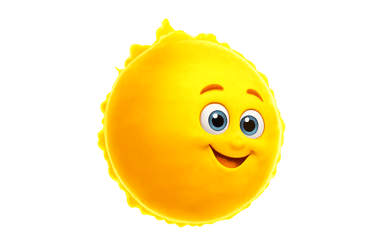
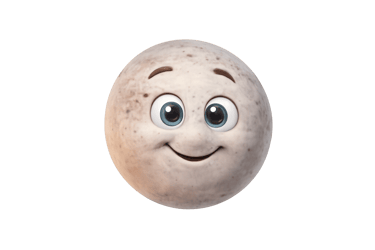
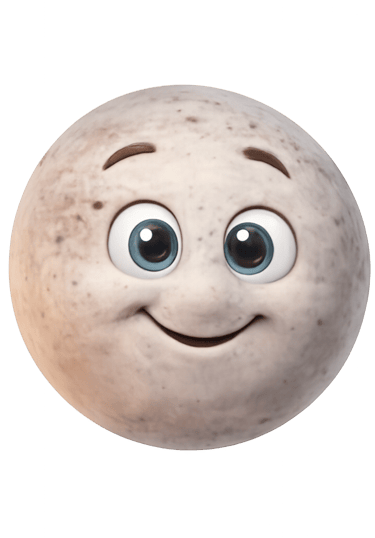
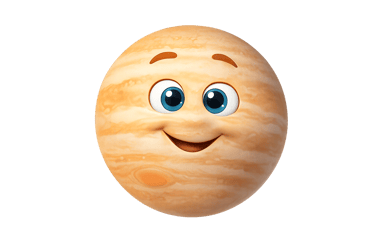
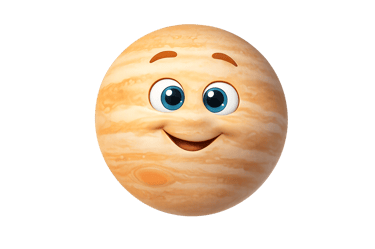
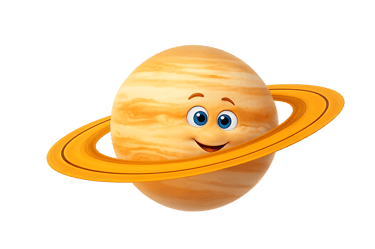
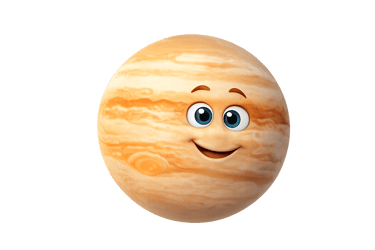
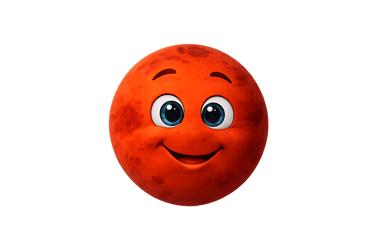
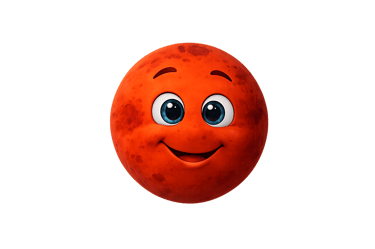
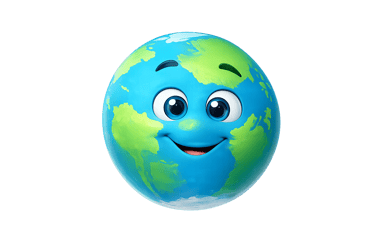
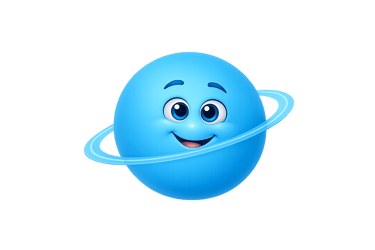
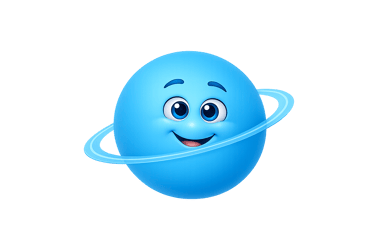
They all move together around the Sun in a giant cosmic dance.
The Moon
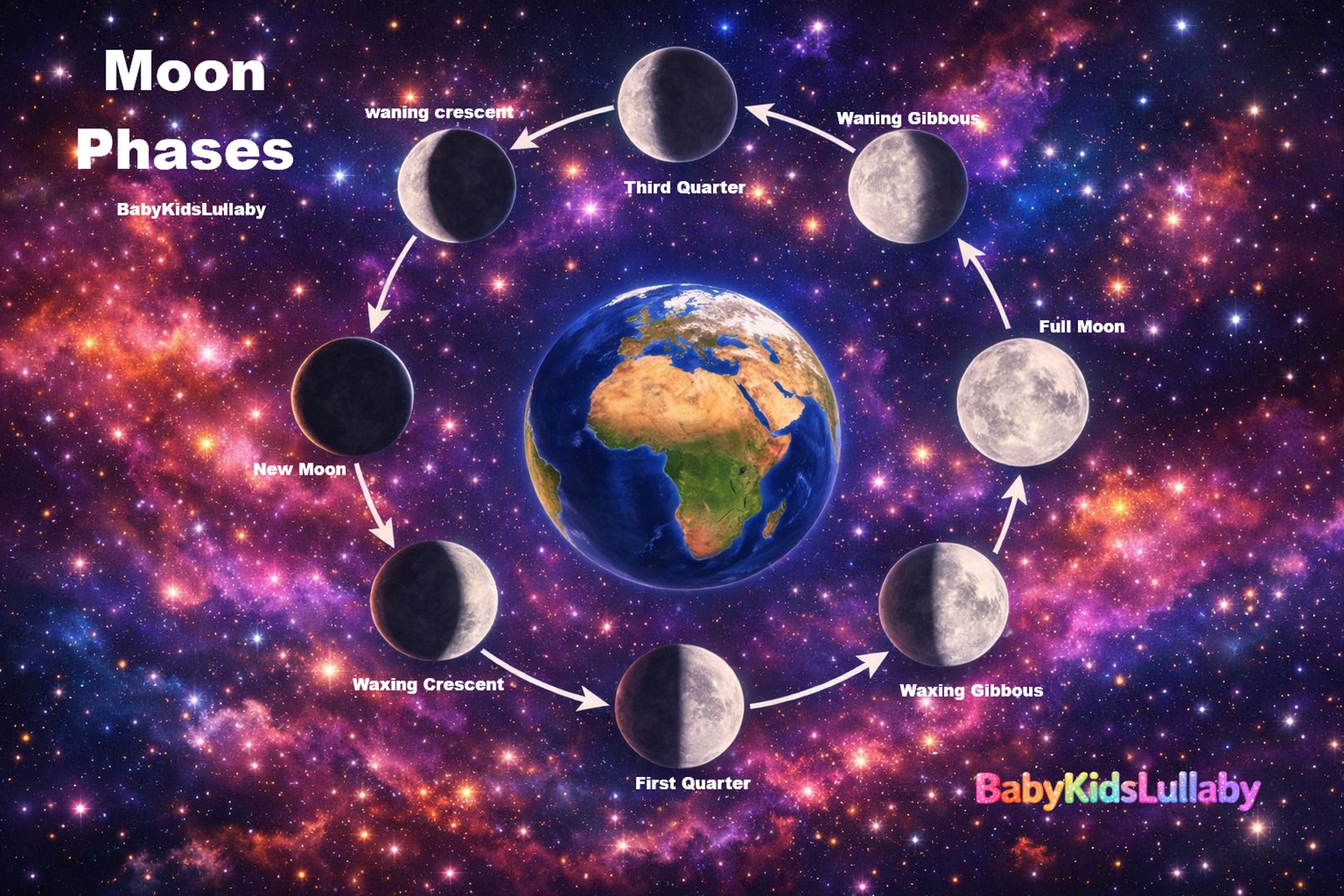
The Moon Phases
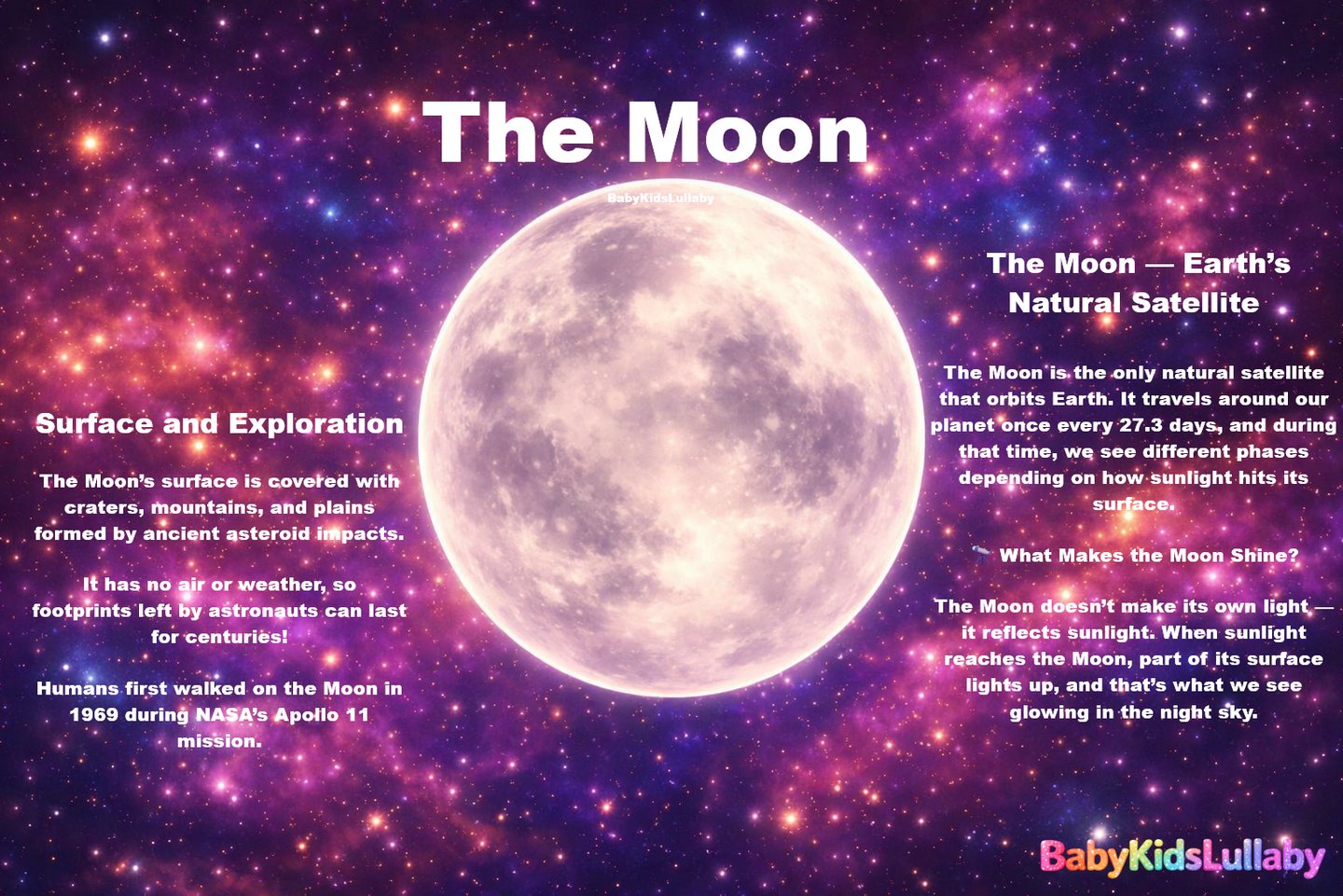
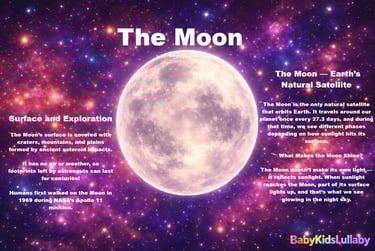
The Moon — Earth’s Natural Satellite
The Moon is the only natural satellite that orbits Earth. It travels around our planet once every 27.3 days, and during that time, we see different phases depending on how sunlight hits its surface.
🔭 What Makes the Moon Shine?
The Moon doesn’t make its own light — it reflects sunlight. When sunlight reaches the Moon, part of its surface lights up, and that’s what we see glowing in the night sky.
🌙 Phases of the Moon
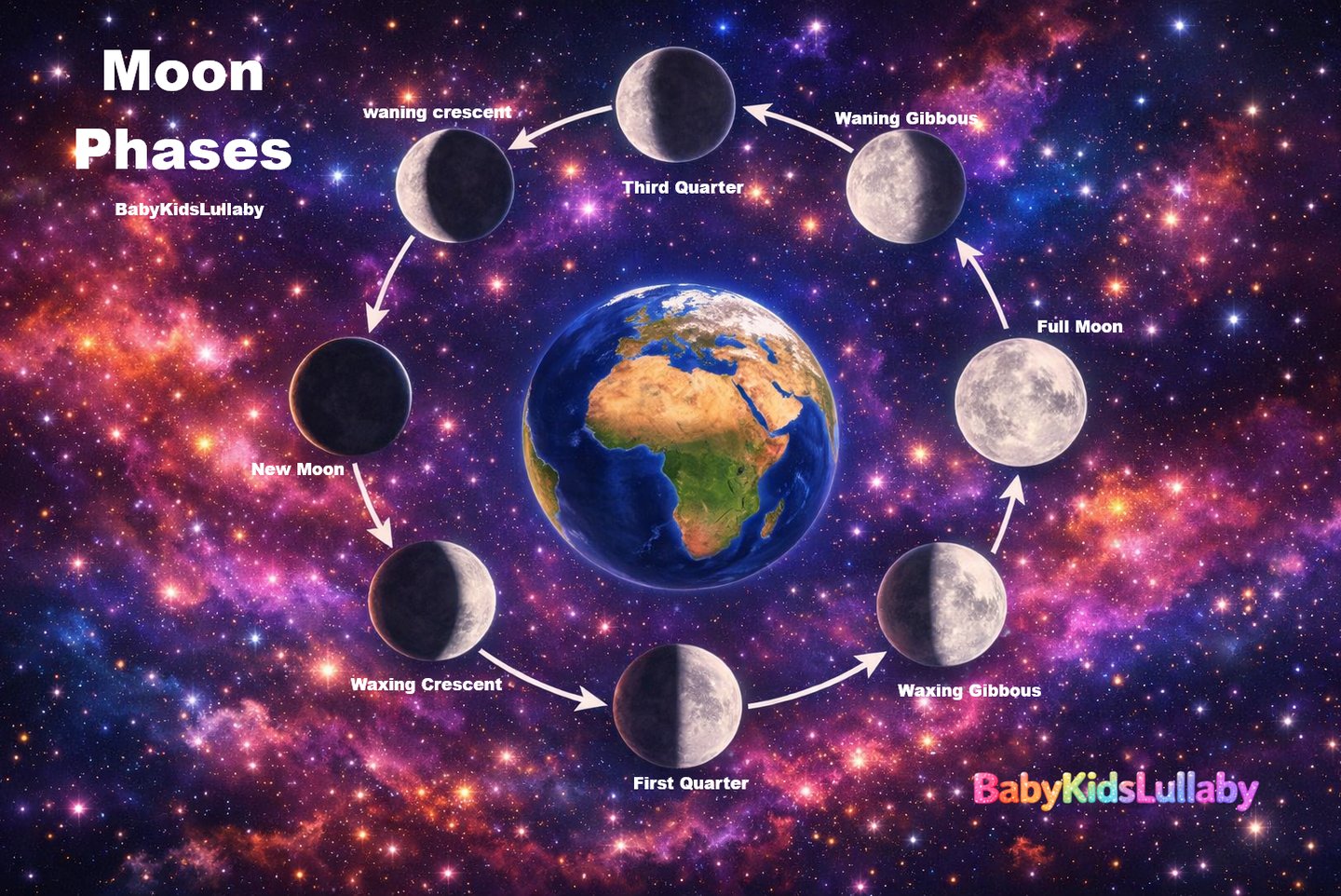
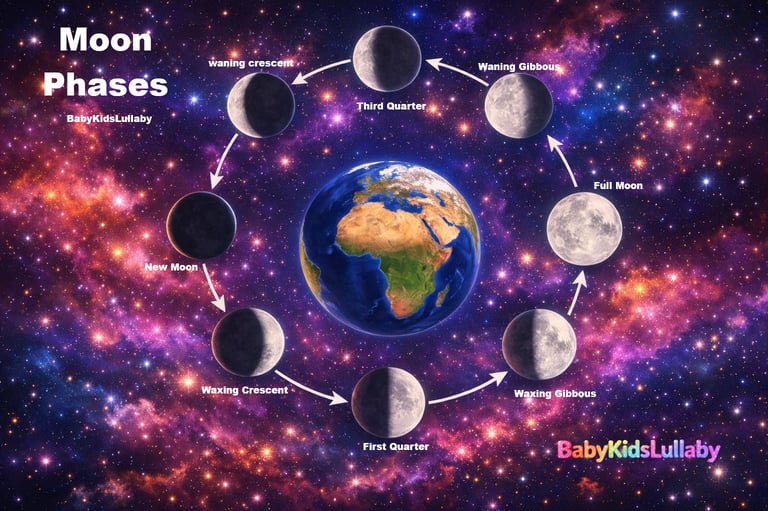
As the Moon moves around Earth, the angle between the Sun, Earth, and Moon changes.
That’s why we see different shapes — from New Moon (completely dark) to Full Moon (fully bright), and everything in between.
🌊 The Moon and Earth
The Moon’s gravity gently pulls on Earth’s oceans, creating tides — the regular rise and fall of sea levels.
It also helps keep Earth’s tilt stable, which makes our seasons more predictable.
🪐 Surface and Exploration
The Moon’s surface is covered with craters, mountains, and plains formed by ancient asteroid impacts.
It has no air or weather, so footprints left by astronauts can last for centuries!
Humans first walked on the Moon in 1969 during NASA’s Apollo 11 mission.
Why Are There Phases of the Moon?
The Moon does not produce its own light but is lit up by the Sun.
As the Moon orbits Earth the parts of the Moon that are reached by the light from the Sun change.
When the Moon and Sun are on opposite sides of the Earth we have a full moon, as we can see the side of the Moon that is fully lit by the Sun.
When the Moon is between Earth and the Sun the side of the Moon that is in shadow is facing us and we can’t see it. This is called a new moon.
Magical Printable Resource
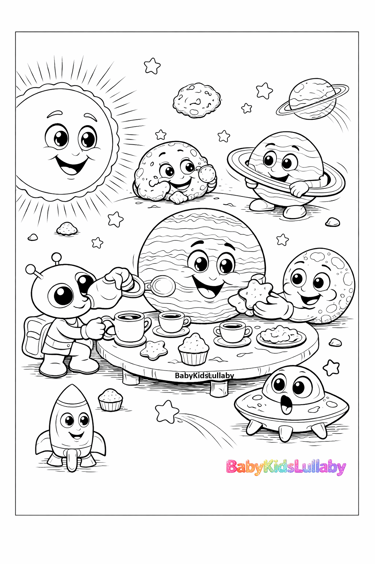
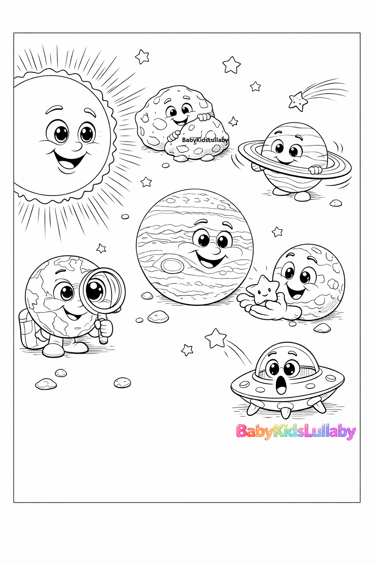
Printable Solar System Poster
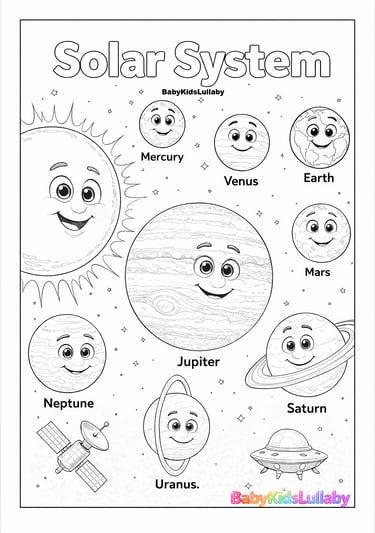
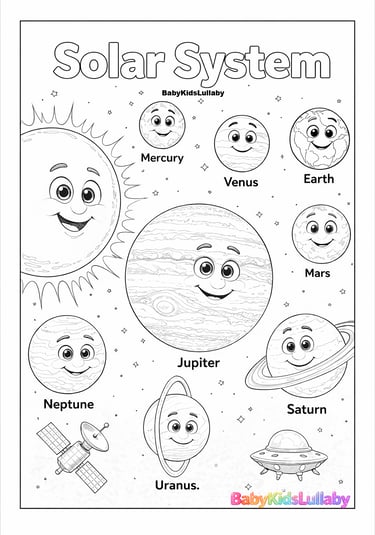
Printable Solar System Poster
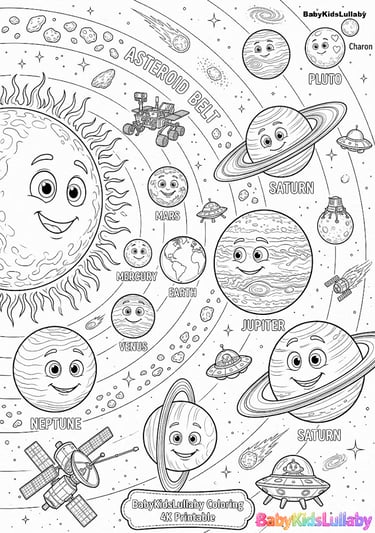
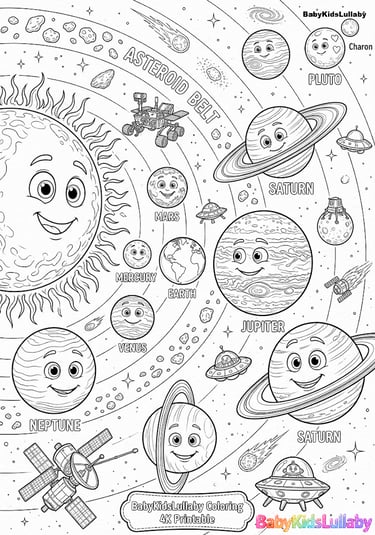
Printable Solar System Poster
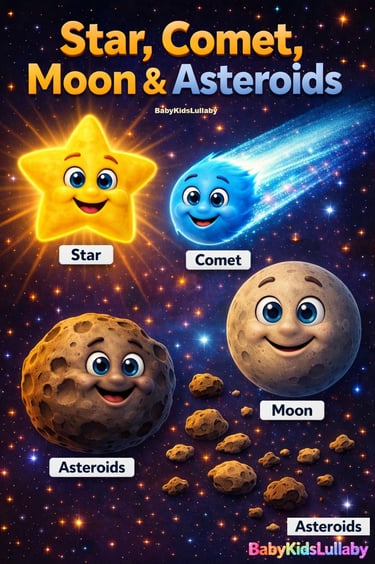
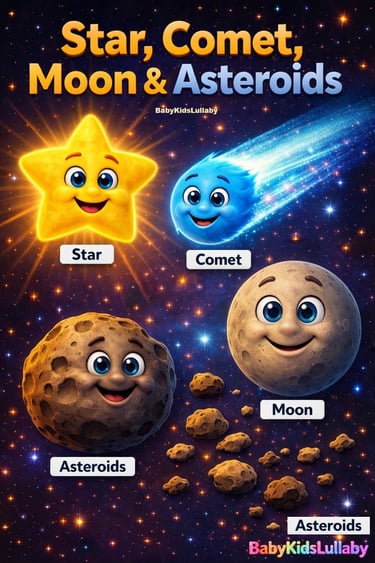
Printable Star,Comet,Moon and Asteroids
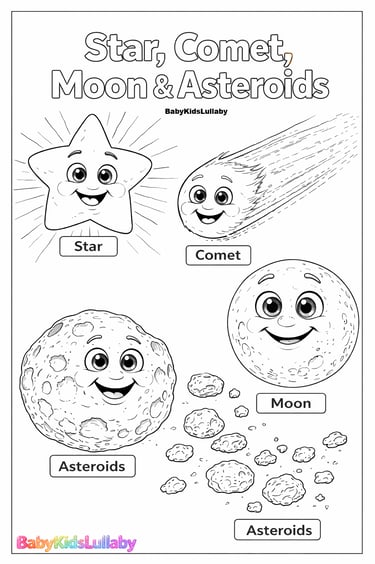
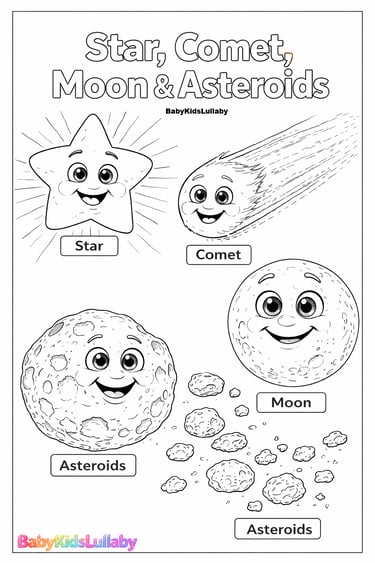
Printable Star,Comet,Moon and Asteroids
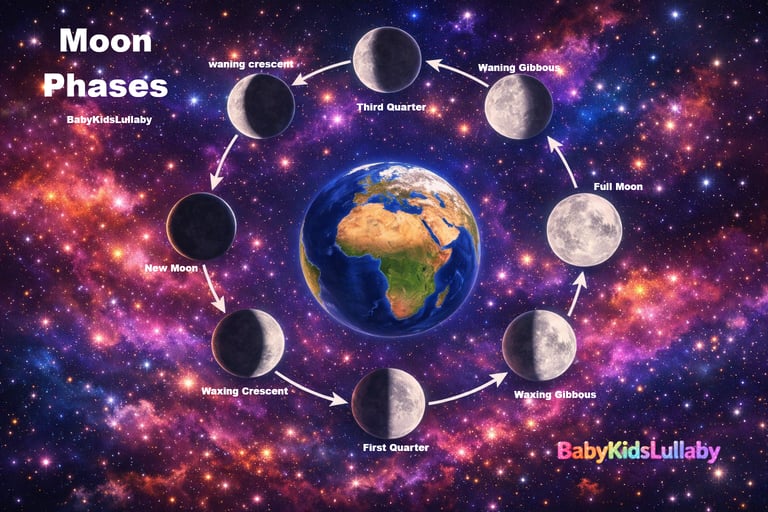
Printable Moon Phases
Printable Moon Poster
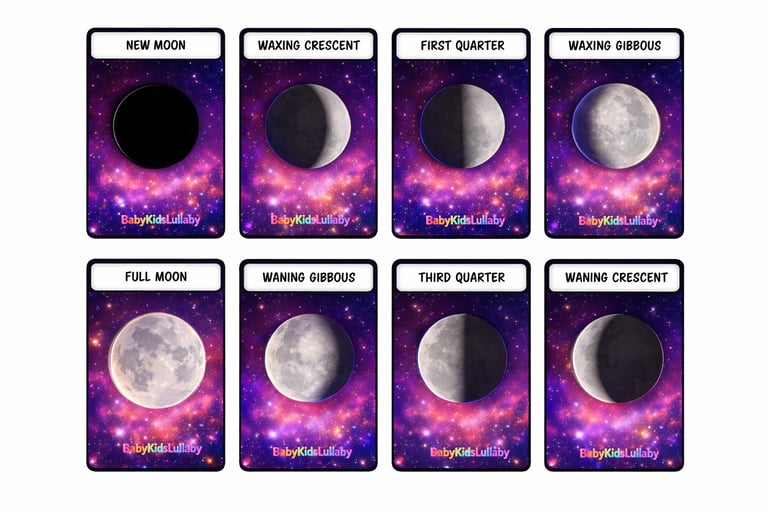
Printable Moon Phases cards
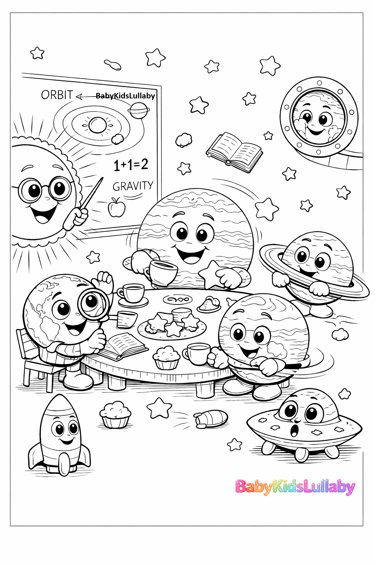
Printable
Printable
Printable
© 2026 FeelingLife Studios / BabyKidsEducation. All rights reserved.All names, characters, images, designs, and learning resources are protected intellectual property. Unauthorized use, copying, or reproduction of any part of this work is prohibited and may result in legal action.
BabyKidsLullaby
BabyKidsLullaby
Thank you for being here



Kids Safe™ — FeelingLife Studios internal standard ensuring gentle, age‑appropriate, and emotionally safe content for young children.